+27 062-085-9201 | info@aplifiedads.online
The Real Reason High-Performing Brands Use Google Ads and Facebook Ads Together

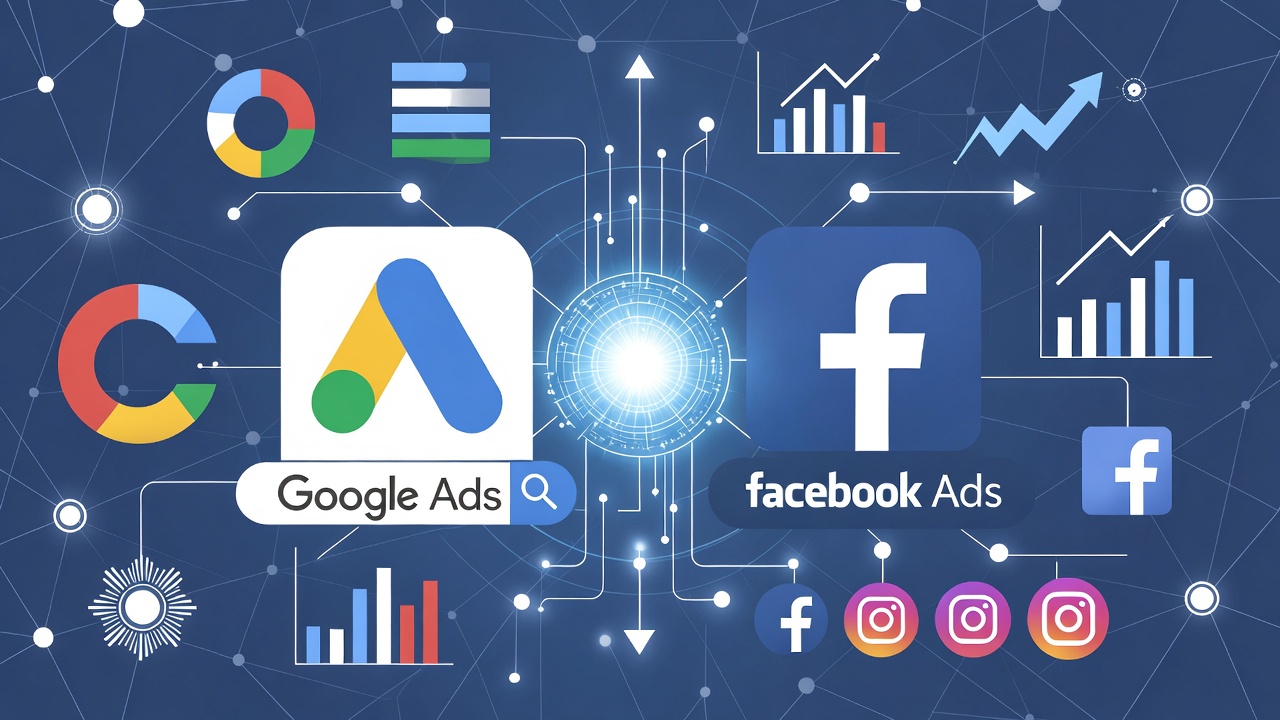
Many businesses treat Google Ads and Facebook Ads as an either-or decision.
They ask:
- “Which one works better?”
- “Should I do Google Ads or Facebook Ads?”
- “Where should I spend my budget?”
This is the wrong question.
The real question is: how do these two channels work together to drive growth?
When used correctly, Google Ads and Facebook Ads don’t compete. They support each other, strengthen results, and reduce wasted spending.
The Core Difference Between Google Ads and Facebook Ads
To understand why both matter, you first need to understand what role each platform plays.
Google Ads Captures Existing Demand
Google Ads targets people who are already searching.
Examples:
- “digital marketing agency near me”
- “plumber in Johannesburg”
- “buy running shoes online”
These users have intent. They are actively looking for a solution. Google Ads puts your business in front of them at the exact moment they are ready to act.
This makes Google Ads extremely powerful for:
- Lead generation
- Sales
- High-intent conversions
Facebook Ads Create and Warm Up Demand
Facebook and Instagram Ads work differently.
People are not searching. They are scrolling.
This means Facebook Ads are ideal for:
- Brand awareness
- Introducing your business
- Educating customers
- Promoting offers
- Retargeting
Facebook Ads help people discover your business before they search for it.
Why Using Only One Channel Limits Growth
Only Using Google Ads Has a Ceiling
Google Ads is demand-driven. If people don’t know your brand yet, they may:
- Click competitors instead
- Compare prices only
- Hesitate to convert
You are also limited by how many people are searching at that moment.
Only Using Facebook Ads Slows Conversions
Facebook Ads can build awareness, but many users are:
- Not ready to buy yet
- Still researching
- Passive
Relying only on Facebook Ads can mean longer conversion times.
How Google Ads and Facebook Ads Work Best Together
When combined, both platforms cover the full customer journey.
Step 1: Facebook Ads Build Awareness and Trust
Facebook Ads:
- Introduce your brand
- Explain your value
- Show social proof
- Educate the market
This plants a seed.
People may not buy immediately, but they remember your business.
Step 2: Google Ads Capture Intent Later
After seeing your brand on Facebook:
- People search your business name
- They Google your service
- They compare options
When your Google Ads appear at this point, conversion rates are higher because:
- The brand is familiar
- Trust is already built
- Decision time is shorter
Step 3: Retargeting Increases Sales
This is where performance improves dramatically.
- Facebook Ads retarget people who visited your website from Google
- Google Ads retarget people who clicked Facebook Ads but didn’t convert
You are no longer advertising to strangers—you are advertising to people who already showed interest.
This reduces cost per conversion and increases ROI.
Real Business Benefits of Using Both Channels
Businesses that combine Google Ads and Facebook Ads typically see:
- Higher conversion rates
- Lower cost per lead or sale
- Stronger brand recall
- Shorter sales cycles
- More predictable growth
Instead of forcing one platform to do everything, each platform does what it’s best at.
Why This Matters for Small and Growing Businesses
Small businesses cannot afford wasted spend.
Using both platforms strategically allows you to:
- Maximise every click
- Control the customer journey
- Compete with larger brands
- Scale gradually and sustainably
This is not about spending more. It’s about spending smarter.
The Role of Strategy and Management
Running both platforms without strategy can still fail.
Success depends on:
- Clear campaign objectives
- Proper conversion tracking
- Correct messaging per platform
- Ongoing optimisation
Without this, businesses often blame the platforms instead of the setup.
How Amplified Ads Approaches Multi-Channel Advertising
At Amplified Ads, we don’t treat Google Ads and Facebook Ads as separate silos.
We build:
- Awareness campaigns on Meta
- High-intent conversion campaigns on Google
- Retargeting across both platforms
- Clear reporting tied to business outcomes
We work with businesses in South Africa and internationally, tailoring strategies to market behaviour while applying proven performance frameworks.
Final Thought
Google Ads answers demand.
Facebook Ads creates demand.
When combined, they guide customers from discovery to decision.
Businesses that understand this don’t ask which platform is better.
They ask how both platforms can work together to grow revenue.
That’s where real digital marketing performance comes from.